

Key takeaways
- Keep tank water healthy with our top aquarium water test kits, chosen for accurate ammonia, nitrite, nitrate, and pH readings for freshwater tanks.
Clear water can hide trouble. Ammonia and nitrite are invisible, and nitrate climbs quietly between water changes, so a tank that looks fine can still stress fish. A good test kit turns guesswork into numbers: dip a strip or mix a few drops, match the color, and you know whether the water is safe, drifting, or in need of a change.
This guide covers five kits that suit different routines, from a full liquid master kit for cycling a new tank to quick strips for weekly checks and single-parameter kits for pinpointing one number. Every pick below is a genuine water-testing kit for home aquariums, verified against its Amazon listing, and each one covers the core measures that matter for freshwater tanks.
Quick Picks
As an Amazon Associate we earn from qualifying purchases
| Product | Best for | Key spec from title |
|---|---|---|
| API Freshwater Master Test Kit | Cycling a new tank | Liquid kit for ammonia, nitrite, nitrate, and pH |
| API 5-in-1 Test Strips | Fast weekly checks | 25 dip strips for pH, nitrite, nitrate, hardness |
| Tetra EasyStrips 6-in-1 | Simple 60-second checks | 25 strips, six readings in one dip |
| Seachem MultiTest Ammonia | Pinpointing ammonia | 75 liquid tests for free and total ammonia |
| Salifert Nitrate Test Kit | Precise nitrate readings | Liquid nitrate kit, 50 tests per box |
How to Choose
Liquid kits or strips
Liquid reagent kits mix a water sample with drops and match the color to a printed card. They take a few minutes per test, yet they give finer steps between values, which helps when ammonia or nitrite sits near zero and a small shift matters. Dip strips trade some of that fineness for speed: one strip, one dip, and a full panel of readings in about a minute. Strips suit weekly checks on an established tank, while liquid kits suit cycling, troubleshooting, and any reading that looks off. Many keepers own both, using strips for routine checks and a liquid kit to confirm anything unusual.
Which parameters matter most
Ammonia and nitrite come first. Both are toxic even at low levels, and a new tank needs both at zero before fish settle in. Nitrate matters next: it climbs as waste breaks down, and steady readings show whether water changes keep pace with feeding and stocking. pH sets the context for everything else, since ammonia turns more harmful as pH rises, and sudden swings stress fish more than a steady value that sits slightly outside the ideal band. Hardness and alkalinity matter for planted tanks and sensitive species, since they shape how stable pH stays between changes. A kit that covers ammonia, nitrite, nitrate, and pH handles daily care; hardness readings add depth for planted setups.
Freshwater, saltwater, or both
Most home kits work in freshwater, and several also work in saltwater, so check the label before you buy. Reef and marine tanks often need tighter nitrate control and extra measures such as phosphate and calcium, which basic freshwater kits do not cover. If you keep a reef tank, pair a general kit with single-parameter kits for the numbers your corals demand. Freshwater keepers have simpler needs: ammonia, nitrite, nitrate, and pH cover the cycle and routine care, with hardness readings as a useful extra for planted tanks. When a kit lists both freshwater and saltwater use, one box can serve two tanks, which keeps the shelf tidy and the routine consistent.
Accuracy, shelf life, and routine
Color matching depends on light, so read strips and vials under bright white light and hold the card beside the sample rather than behind it. Reagents age, and an old bottle can drift, so note the date you open each bottle and replace kits that have sat unused for a year or more. Strips hate moisture: keep the cap tight, keep the bottle dry, and never dip a strip straight into the tank. Test on a schedule that fits the tank: daily while cycling, weekly once the tank settles, and right away when fish act oddly or after a big water change. Writing each result in a notebook turns single readings into a trend you can act on.
The 5 Best Options
API Freshwater Master Test Kit

The API Freshwater Master Test Kit is the liquid kit most freshwater keepers reach for first, and the 800-test capacity means one box lasts through cycling and many months of weekly checks. Seven reagent bottles cover pH, high-range pH, ammonia, nitrite, and nitrate, with four test tubes, a holding tray, and a laminated color card in the box. The color steps are fine enough to catch ammonia and nitrite while they are still low, which is exactly when action matters most. Each test takes a few minutes, so it rewards keepers who want precision over speed.
Specs
- 800 tests per kit
- Measures pH, high-range pH, ammonia, nitrite, and nitrate
- Includes 7 reagent bottles, 4 test tubes, a holding tray, and a laminated color card
- Item model number 34
- Manufacturer: Mars Fishcare
- Style: Freshwater
Best for: Keepers cycling a new tank or confirming a reading that looks off.
Watch out for: Each test takes several minutes, and the bottles need careful storage between uses.
ASIN: B000255NCI
API 5-in-1 Test Strips
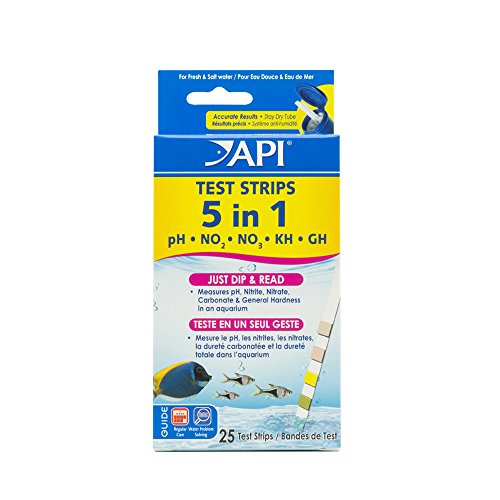
API 5-in-1 Test Strips turn a weekly check into a one-minute habit: dip a strip, wait, and compare five pads against the chart on the bottle. One strip reads pH, nitrite, nitrate, carbonate hardness, and general hardness in both freshwater and saltwater tanks. The 25-count box suits a keeper who tests weekly and wants a quick scan between deeper liquid checks. Strips read in broad bands rather than fine steps, so treat a surprising pad as a prompt to confirm with a liquid kit rather than a final answer.
Specs
- 25 strips per box
- Measures pH, nitrite, nitrate, carbonate hardness, and general hardness
- Works in freshwater and saltwater aquariums
- Item model number 33G
- Manufacturer: Mars Fishcare
- Results in about a minute
Best for: Weekly routine checks on an established tank.
Watch out for: No ammonia pad, so pair it with a liquid kit while cycling or when ammonia is a concern.
ASIN: B000HHOAIY
Tetra EasyStrips 6-in-1

Tetra EasyStrips 6-in-1 gives six readings from a single dip, and the 60-second wait makes it the easiest strip kit in this guide to fit into a routine. One strip checks chlorine, nitrite, nitrate, alkalinity, hardness, and pH, which covers the weekly panel for an established freshwater or saltwater tank. The chlorine pad earns its place for keepers who test freshly treated tap water before a change. The 25-count bottle lasts about half a year of weekly checks, and the color bands are easy to read under bright light.
Specs
- 25 strips per box
- Measures chlorine, nitrite, nitrate, alkalinity, hardness, and pH
- Results in 60 seconds
- Item model number 19542
- Works in freshwater and saltwater aquariums
- Use weekly, after water changes, or when adding new fish
Best for: Keepers who want one quick weekly strip check.
Watch out for: No ammonia test, so new-tank keepers need a separate ammonia check.
ASIN: B0053PR7P8
Seachem MultiTest Ammonia

Seachem MultiTest Ammonia answers the one question that matters most in a new tank: how much ammonia is present, and how much of it is the toxic free form. The kit measures total ammonia and free ammonia down to less than 0.05 mg/L in marine and fresh water, with a multi-cavity plate that runs up to six tests at once. Seventy-five tests per kit means plenty of checks through cycling and beyond. It tests one parameter only, so it works best beside a broader kit, yet no general kit in this guide matches its ammonia detail.
Specs
- 75 tests per kit
- Measures total ammonia (NH3 and NH4+) and free ammonia (NH3) down to less than 0.05 mg/L
- Works in marine and fresh water
- Multi-cavity plate for up to 6 tests at once
- Item model number 950
Best for: Cycling a new tank or tracking ammonia after adding fish.
Watch out for: Ammonia only, so pair it with a kit that covers nitrite, nitrate, and pH.
ASIN: B0002A5XFU
Salifert Nitrate Test Kit
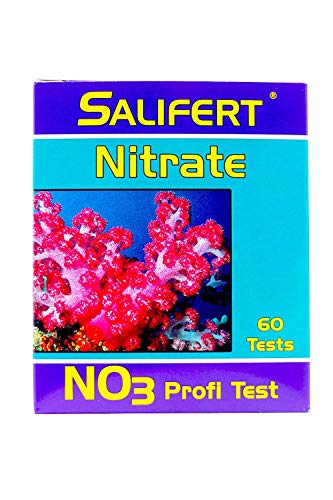
Salifert Nitrate Test Kit gives reef and planted-tank keepers the nitrate precision that broad kits skip. The liquid kit reads nitrate from 0.2 to 100 mg/L in under three minutes, with 50 tests per box and a color chart tuned for fine steps at the low end where planted tanks live. It suits freshwater, marine, fish-only, and reef tanks alike. One parameter is the whole point here: when nitrate is the number you manage daily, a dedicated kit beats a strip panel that reads it in broad bands.
Specs
- 50 tests per kit
- Measures nitrate from 0.2 to 100 mg/L
- Results in under 3 minutes
- Suitable for reef, marine, fish-only, and freshwater aquariums
- Two-reagent liquid test with color chart
Best for: Planted and reef keepers who manage nitrate closely.
Watch out for: Nitrate only, so it cannot replace a kit that covers ammonia, nitrite, and pH.
ASIN: B001EHCDBW
Which One Fits Your Situation
Cycling a new tank
Ammonia and nitrite decide whether a new tank is ready, so reach for the API Master Kit first and add the Seachem ammonia kit when you want free-ammonia detail. Test daily while the cycle builds, and wait until ammonia and nitrite both read zero for several days in a row before adding fish. Strips alone cannot carry this job, since neither strip kit here reads ammonia.
Weekly checks on an established tank
Once the cycle settles, a strip kit does the weekly work. Tetra EasyStrips covers six measures in one dip, and API 5-in-1 adds hardness detail for planted setups. Dip on the same day each week, write the numbers down, and confirm any odd pad with the liquid master kit before changing anything big.
Planted or reef tanks
Planted and reef tanks live or die by nitrate and stability, so Salifert earns its place for fine nitrate steps, while the API Master Kit tracks the cycle numbers around it. Test nitrate weekly, watch the trend rather than a single reading, and pair nitrate checks with hardness readings when plants or corals show stress.
Keepers who want speed
If testing feels like a chore, strips keep it short. Tetra EasyStrips reads six measures in 60 seconds, and API 5-in-1 covers five in about a minute. Keep the liquid master kit on the shelf for the days a strip looks off, and the fast routine stays honest without taking over your evening.
Common Mistakes
- Testing only when fish look sick, instead of on a schedule that catches drift early.
- Dipping a strip straight into the tank, which wets the bottle and ruins the remaining strips.
- Reading colors under warm yellow light, which shifts every pad and vial.
- Trusting a single odd reading without confirming it with a liquid kit.
- Using expired reagents or damp strips and wondering why the numbers jump around.
Frequently Asked Questions
How often should I test my aquarium water?
Test daily while cycling a new tank, since ammonia and nitrite can climb fast. Once the tank settles, weekly checks cover routine care, with an extra test after water changes, new fish, or any sign of stress. Keep a notebook so trends show up before single readings turn into trouble.
Do test strips work as well as liquid kits?
Strips trade precision for speed. They read in broad bands, which suits weekly checks on an established tank, while liquid kits give finer steps that matter when ammonia or nitrite sits near zero. Use strips for routine scans and a liquid kit to confirm anything that looks off.
What should ammonia and nitrite read in a healthy tank?
Both should read zero in a cycled tank. Any ammonia or nitrite above zero means the biofilter is still catching up or something changed, so test again, check feeding and stocking, and change part of the water. Keep testing daily until both numbers settle back at zero.
Can I use one kit for freshwater and saltwater tanks?
Some kits work in both, including the API 5-in-1 strips and Tetra EasyStrips, while the API Master Kit in this guide is the freshwater version. Reef tanks need tighter nitrate control and extra measures, so pair a general kit with single-parameter kits for the numbers your setup demands.
More from Amazon
Programs that pair well with the guide above. Offers and eligibility are set by Amazon and may change.
Free shipping on eligible items, Prime Video and more. Eligible new members can start with a free trial.
Start a Prime free trialAudiobooks and podcasts to listen to on the go. Eligible new members can start with a free trial.
Try Audible freeAd-free music streaming. Eligible new subscribers can start with a free trial.
Try Music Unlimited freeA free business account with business pricing and bulk-buying tools for work, shop or home office.
Create a business accountAs an Amazon Associate we earn from qualifying purchases.






Write Your Review
No reviews yet. Be the first to share your experience!