

Key takeaways
- Compare five cat foods, from grain-free kibble to wet pate and freeze-dried meals, that keep cats healthy with balanced nutrition and flavors cats love.
Feeding a cat well comes down to a few steady choices: a food that matches the cat’s age and activity, a form the cat will actually eat, and a recipe that sits well in the stomach. Wet food adds moisture to the bowl, dry food keeps well in a scoop, and both can carry complete nutrition when the recipe is balanced. The five foods below cover those bases, and every one is a full daily food rather than a snack or a topper.
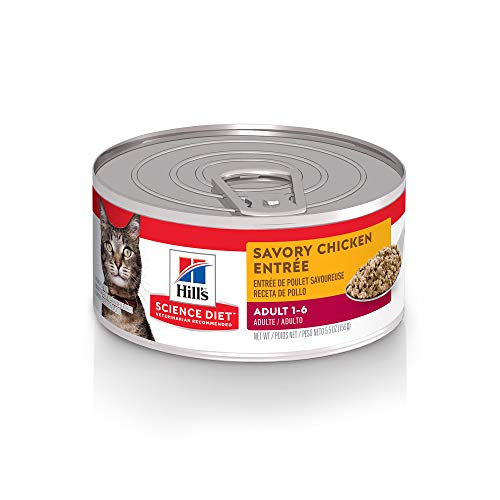

This list leans on everyday recipes for adult cats, with one option for sensitive stomachs and one for older indoor cats. Each pick is a distinct recipe, so a minced wet food and a stew wet food count as two different meals, not two sizes of the same can. Read the feeding guide on each pack, watch how your cat responds over two weeks, and talk with your vet when a health concern shapes the choice.
Quick Picks
As an Amazon Associate we earn from qualifying purchases
| Product | Best for | Key spec from title |
|---|---|---|
| Hill’s Science Diet Adult 1-6 Wet, Chicken Minced | Everyday wet feeding | 24 cans per case |
| Hill’s Science Diet Sensitive Stomach & Skin Dry | Sensitive stomachs and skin | 7 lb bag, chicken and rice |
| Blue Buffalo Freedom Grain-Free Wet, Mature Indoor | Older indoor cats | Grain-free pate, 24 cans |
| Blue Buffalo Tastefuls Dry Indoor | Indoor adult cats | 15 lb bag, chicken first |
| Hill’s Science Diet Adult 1-6 Wet, Chicken Stew | Cats that prefer chunks in sauce | Stew texture, 24 cans |
How to Choose
Wet or Dry First
Wet food carries a lot of water, which helps cats that drink little from a bowl, while dry food is easy to measure, store, and leave down for a grazer. Many homes mix the two, using wet food at set meals and dry food between them, and that mix can work well as long as the total daily amount stays within the feeding guide. Think about your cat’s habits first: a cat that laps little water gains more from wet food, while a cat that snacks through the day may do better with measured dry meals. Age matters too, since older cats often prefer soft textures.
Life Stage and Indoor Living
Adult cats need a different balance from kittens and seniors, so the label’s life stage is worth checking before anything else. Indoor cats move less than outdoor cats, which means their food should suit a lower activity level without piling on extra calories, and fiber can help with hairballs that show up more in indoor life. Mature indoor recipes often add joint support and easier digestion, while standard adult recipes suit younger indoor cats that still play hard. Match the recipe to where your cat actually lives and how much it moves, then keep the portions steady.
Sensitive Stomachs and Skin
A cat that vomits often, passes loose stools, or scratches without fleas may do better on a recipe built for sensitive stomachs and skin. Those recipes usually rely on a single main protein, gentle fiber such as prebiotic fiber, and a short ingredient list that leaves out common irritants. A diet change should happen slowly over a week, mixing the new food into the old in growing amounts, so the gut can adjust without upset. If the symptoms stay after a careful change, a vet visit is the next move, since food alone cannot fix every digestive problem.
Ingredients and Feeding Guides
The ingredient list tells you what the food is made from, while the feeding guide tells you how much of it your cat needs. Real meat or fish listed first is a good sign, and named ingredients beat vague terms every time. The guaranteed analysis gives protein, fat, fiber, and moisture levels, but those numbers only make sense when you compare foods of the same form, since wet food holds far more water than dry food. Follow the guide for your cat’s weight, then adjust by body condition: ribs should be easy to feel under a thin fat layer, and the waist should narrow when seen from above.
The 5 Best Options
Hill’s Science Diet Adult 1-6 Wet Cat Food, Chicken Minced
Hill’s Science Diet Adult 1-6 wet food in chicken minced form gives adult cats a soft, spoonable meal with chicken as the first ingredient. The minced texture suits cats that like small, tender pieces and lick the bowl clean, and the case of 24 cans keeps a full month of daily meals on the shelf. Water, chicken, and turkey giblets lead the ingredient list, with fish oil and taurine in the mix, and the recipe is built for adult maintenance rather than growth. It works well as a main meal for cats that eat wet food at set times each day.
Specs
- 24 cans per case, 5 oz cans
- Chicken as the first ingredient
- Model number 4534
- Case size 14 x 10.44 x 3.13 inches
- Case weight 8.26 pounds
Best for: Adult cats that prefer soft, minced wet food at set meals.
Watch out for: The case weighs over 8 pounds, so lift it with care when you bring it home.
Hill’s Science Diet Sensitive Stomach & Skin Dry Cat Food, Chicken & Rice
Hill’s Sensitive Stomach & Skin dry food pairs chicken and rice with prebiotic fiber, a mix made for cats whose stomachs and skin need a gentler recipe. The kibble suits adult cats from one to six years, and the formula aims at steady digestion plus a healthy coat. Chicken leads the ingredient list, followed by brewers rice and corn gluten meal, with oat fiber and fructooligosaccharides in the blend. The 7 lb bag lasts a single-cat home for weeks, and the pellet form keeps well in a sealed container between meals.
Specs
- 7 lb bag
- Chicken and rice recipe
- Prebiotic fiber (fructooligosaccharides) in the blend
- Pellet form
- Model number 8884
- UPC 052742888408
Best for: Adult cats with touchy stomachs or dull coats.
Watch out for: Change foods slowly over a week to avoid an upset stomach.
Blue Buffalo Freedom Grain-Free Wet Cat Food, Mature Indoor Chicken

Blue Buffalo Freedom grain-free wet food is a pate made for mature indoor cats, with chicken, chicken broth, and chicken liver at the top of the ingredient list. The recipe leaves out grains that contain gluten, by-product meals, corn, wheat, soy, and artificial flavors, which suits owners who read labels closely. Carrots, sweet potatoes, cranberries, and blueberries add variety to the pate, and flaxseed brings omega fatty acids into the mix. The case holds 24 cans of 5.5 oz each, and the feeding guide suggests one can per 6 to 8 pounds of body weight each day.
Specs
- 24 cans per case, 5.5 oz cans
- Pate form
- Chicken as the first ingredient
- Grain-free, with no grains that contain gluten
- Feeding guide: 1 can per 6 to 8 pounds of body weight per day
- Model number 800637
Best for: Mature indoor cats that need a soft, grain-free pate.
Watch out for: The pate is rich, so measure each can against the feeding guide.
Blue Buffalo Tastefuls Dry Cat Food, Indoor Chicken & Brown Rice

Blue Buffalo Tastefuls dry food for indoor adult cats leads with deboned chicken, then chicken meal and fish meal, with brown rice, barley, and oatmeal as the grains. The recipe is made for indoor cats, with fiber and nutrients aimed at digestion and coat health, and it carries no chicken or poultry by-product meals. The 15 lb bag suits a home that feeds dry food as the main meal, and the kibble stores well in a sealed bin. Feeding runs from a quarter cup for smaller cats to three quarters of a cup for larger ones, using a standard 8 oz measuring cup.
Specs
- 15 lb bag
- Deboned chicken as the first ingredient
- Brown rice, barley, and oatmeal in the recipe
- No chicken or poultry by-product meals
- Feeding guide: 1/4 to 1/2 cup for cats 5 to 9 lb; 1/2 to 3/4 cup for cats 10 to 14 lb
Best for: Indoor adult cats that eat dry food as their main meal.
Watch out for: Measure every scoop, since indoor cats gain weight easily.
Hill’s Science Diet Adult 1-6 Wet Cat Food, Chicken Stew
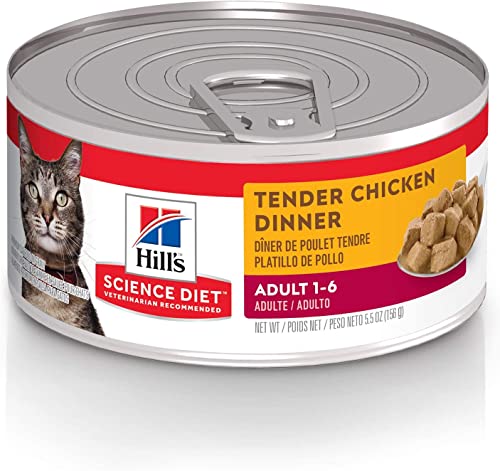
Hill’s Science Diet Adult 1-6 wet food in chicken stew form offers tender chicken pieces in a stew for cats that turn away from smooth pate. Water and chicken lead the ingredient list, with pork liver, wheat flour, and wheat gluten giving the stew its body, and fish oil and taurine round out the mix. The 24-pack of 5.5 oz cans keeps a steady supply on hand, and the stew texture can tempt a picky eater that leaves minced food untouched. It is a distinct recipe from the minced version, so the two can rotate without repeating the same meal.
Specs
- 24 cans per case, 5.5 oz cans
- Chicken stew flavor
- Adult 1-6 life stage
- UPC 052742177014
- Water and chicken lead the ingredient list
Best for: Adult cats that prefer chunks in sauce over smooth pate.
Watch out for: The stew is a different recipe from the minced version, so do not treat the two as one food.
Which One Fits Your Situation
A Cat That Drinks Too Little Water
Pick a wet food as the main meal, since the water in the can adds moisture with every bite. The Hill’s minced and stew recipes both suit this need, and a case of 24 cans keeps the routine simple. Keep a fresh water bowl down as well, and watch the litter box: steady, normal output tells you the extra moisture is doing its job.
A Cat With a Sensitive Stomach
Choose the Hill’s Sensitive Stomach & Skin dry food and change foods over a full week, mixing the new kibble into the old in growing amounts. The prebiotic fiber and short, gentle recipe give the gut time to settle. If vomiting or loose stools continue after the change, book a vet visit rather than trying another bag on your own.
An Older Cat That Stays Indoors
Go with the Blue Buffalo Freedom mature indoor pate, which is made for older indoor cats and skips grains that contain gluten. The soft pate suits aging jaws, and the case of 24 cans covers more than three weeks of meals. Pair it with short daily play to keep muscles and joints moving.
A Household That Wants One Simple Routine
Keep one dry food as the base and add wet food at one set meal each day. The Blue Buffalo Tastefuls 15 lb bag anchors the routine, while a case of Hill’s minced or stew cans covers the wet meal. Measure both parts, store the bag sealed, and the routine runs itself.
Common Mistakes
- Switching foods overnight instead of mixing the new food in over a week.
- Feeding by eye rather than measuring with a cup or a scale.
- Treating treats and table scraps as free extras on top of full meals.
- Picking a kitten or senior recipe for a healthy adult cat without a reason.
- Ignoring the water bowl when a cat eats dry food all day.
Frequently Asked Questions
How much wet food should a cat eat each day?
Follow the guide on the can: the Blue Buffalo Freedom pate suggests one 5.5 oz can per 6 to 8 pounds of body weight each day, split across meals. A vet can fine-tune the amount for your cat’s weight and activity, and a kitchen scale beats a guess when you measure portions.
Can I mix wet and dry food?
Yes, many homes mix the two, using wet food at set meals and dry food between them. Keep the total daily amount within the feeding guides for both foods, so the mix does not add extra calories on top of full portions of each.
Is grain-free food better for every cat?
No, grain-free suits some cats and offers no gain for others. A healthy cat can do well on a recipe with wholesome grains such as brown rice and barley, while a grain-free pate helps cats that do best without gluten grains. Judge by your cat’s digestion and coat, not by the label alone.
How do I move my cat to a new food?
Mix the new food into the old food over about a week, raising the new share a little each day. Watch the stool and appetite during the change, and slow down if the stomach turns uneasy. If the cat refuses the new food for more than a day, try a different texture rather than forcing the same can.
More from Amazon
Programs that pair well with the guide above. Offers and eligibility are set by Amazon and may change.
Free shipping on eligible items, Prime Video and more. Eligible new members can start with a free trial.
Start a Prime free trialAudiobooks and podcasts to listen to on the go. Eligible new members can start with a free trial.
Try Audible freeAd-free music streaming. Eligible new subscribers can start with a free trial.
Try Music Unlimited freeA free business account with business pricing and bulk-buying tools for work, shop or home office.
Create a business accountAs an Amazon Associate we earn from qualifying purchases.






Write Your Review
No reviews yet. Be the first to share your experience!