
Our Short List of 3
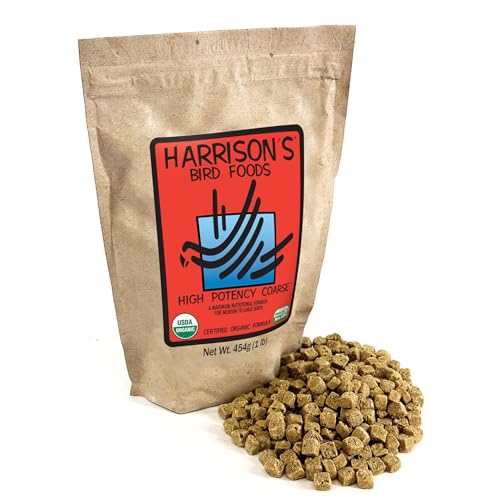
- Best for: Medium and large parrots that need a rich, vet-developed daily pellet.
- Certified organic, non-GMO pellets made for birds
- 1 lb bag, 454 g
- Crude protein, minimum 18 percent; crude fat, minimum 15 percent
- Crude fiber, maximum 6.5 percent; moisture, maximum 10 percent

- Best for: Picky eaters that need fruit flavor to accept pellets.
- Fruit-flavored pellets with banana, apple, orange, and grape
- 3.5 lb bag, model 1008056
- Medium-large size for parrots and conures
- Feeding guide: conures and caiques, quarter to half cup daily; African greys, amazons, and eclectus, half cup daily

- Best for: Owners who want the cleanest organic pellet with no corn or soy.
- USDA Organic certified, non-GMO pellets
- 4 lb bag, quarter-inch pellets, cold-pressed
- No corn, soy, fillers, BHA, BHT, or ethoxyquin
- No artificial colors, flavors, preservatives, or added sugar
All 5 Picks at a Glance
| Product | Specs | Action |
|---|---|---|
| Harrison’s High Potency Coarse |
| Check price on Amazon |
| ZuPreem FruitBlend ML |
| Check price on Amazon |
| TOP’s Parrot Pellets 4 lb |
| Check price on Amazon |
 ZuPreem Natural ML |
| Check price on Amazon |
 RoudyBush Daily Maintenance Mini |
| Check price on Amazon |
Key takeaways
- Compare the best parrot food for healthy parrots, from pellets to seed blends, and keep your parrot fed with balanced, healthy nutrition every day.
A parrot eats the same food every day, so the bag you choose shapes feathers, energy, and long-term health more than any toy or perch ever will. Seed mixes let a picky bird eat only the fatty pieces it likes, while a formulated pellet gives the same balanced nutrition in every bite. The five foods below cover the main approaches owners rely on: organic pellets, fruit-flavored pellets, plain natural pellets, and a small-pellet staple for little parrots.
Each pick below comes from a brand avian vets and long-time keepers name again and again, and each one is a distinct formula rather than a different bag size of the same food. Use the guide to match pellet size and flavor style to your bird, then check the listing before you buy, since stock moves quickly on popular parrot food.
Quick Picks
As an Amazon Associate we earn from qualifying purchases
| Product | Best for | Key spec from title |
|---|---|---|
| Harrison’s High Potency Coarse | Organic pellets for medium and large parrots | Certified organic, 1 lb bag |
| ZuPreem FruitBlend ML | Fruit-flavored pellets for picky eaters | Banana, apple, orange, and grape flavors, 3.5 lb bag |
| TOP’s Parrot Pellets 4 lb | Cold-pressed organic pellets with no corn or soy | USDA Organic, quarter-inch pellets, 4 lb bag |
| ZuPreem Natural ML | Plain pellets with garden vegetables | No artificial colors, 3 lb bag |
| RoudyBush Daily Maintenance Mini | Small pellets for conures and lovebirds | Mini pellets, 44 oz bag |
How to Choose
Pellet size and your bird’s beak
A parrot holds food in one foot and cracks it with its beak, so pellet size decides whether dinner is easy or a chore. Large pellets suit macaws, cockatoos, and African greys, which handle a quarter-inch piece without trouble. Medium pellets fit conures, caiques, and amazons, while mini pellets suit lovebirds, parrotlets, and small conures. A pellet that is too large gets dropped and wasted, and one that is too small can be swallowed whole without the chewing that keeps a beak busy. Match the pellet to the bird in front of you, not to the size printed for a different species.
Pellets first, seed as a treat
Seed mixes look generous, but a parrot picks out sunflower seeds and leaves the rest, so the diet ends up fatty and short on vitamins. A pellet blends grains, vitamins, and minerals into every piece, which means each bite carries the same nutrition. Vets who work with parrots suggest pellets as the main daily food, with fresh vegetables, fruit, and a small amount of seed as extras. The change takes patience: mix pellets with the old food and raise the pellet share over a week or two, so the bird learns the new food is safe. A bird that eats pellets every day is easier to feed well for years.
Organic and plain formulas
Ingredient lists split parrot food into two camps: plain formulas built on corn and soy, and organic blends that skip corn, soy, and synthetic additives. Neither style is wrong, and many birds do well on either one. Organic pellets appeal to owners who want certified ingredients and cold-pressed processing, while plain pellets cost less per pound and suit owners feeding several birds. Fruit-flavored pellets help picky eaters, though the colors come from added dyes in some brands. Read the ingredient list on the bag and pick the formula that fits your budget and your bird’s tastes, then stay with it so the bird eats with confidence.
Bag size, freshness, and storage
Pellets lose flavor and nutrients once the bag is open, so buy a size your flock finishes within six to eight weeks. A single parrot eats through a one-pound bag slowly, while a house with three or four birds can use a five-pound tub before the food goes stale. Keep the bag sealed, cool, and dry, and move a week’s worth into a small airtight jar so the main bag stays closed. Check the date on the bag when it arrives, and toss pellets that smell musty or look damp. Fresh food matters as much as the brand name on the label.
The 5 Best Options
Harrison’s High Potency Coarse
- Best for: Medium and large parrots that need a rich, vet-developed daily pellet.
- Certified organic, non-GMO pellets made for birds
- 1 lb bag, 454 g
- Crude protein, minimum 18 percent; crude fat, minimum 15 percent
- Crude fiber, maximum 6.5 percent; moisture, maximum 10 percent
Medium and large parrots that need a rich, vet-developed daily pellet.
Rich formula — move to a maintenance blend after about six months, per the maker.
Harrison’s High Potency Coarse is the pellet avian vets reach for when a parrot needs extra nutrition: a bird converting from seed, a breeding pair, a molting bird, or one recovering from illness. The coarse nuggets suit medium and large parrots such as African greys, cockatoos, macaws, and eclectus, and the certified organic, non-GMO recipe uses whole grains and legumes with balanced omega fatty acids. The maker suggests keeping a bird on this rich formula for at least six months before moving to a maintenance blend. Confirm the listing shows stock before you buy, since this bag has shown gaps in Amazon availability.
ZuPreem FruitBlend ML
- Best for: Picky eaters that need fruit flavor to accept pellets.
- Fruit-flavored pellets with banana, apple, orange, and grape
- 3.5 lb bag, model 1008056
- Medium-large size for parrots and conures
- Feeding guide: conures and caiques, quarter to half cup daily; African greys, amazons, and eclectus, half cup daily
Picky eaters that need fruit flavor to accept pellets.
Fruit colors may stain light-colored perches and cage liners.
ZuPreem FruitBlend is the pick for parrots that turn away from plain brown pellets. The colorful pieces carry banana, apple, orange, and grape flavors, and the medium-large size fits conures, caiques, African greys, amazons, eclectus, and small cockatoos. Each pellet holds the same mix of vitamins, minerals, and antioxidants, so a bird cannot pick out only the tasty bits the way it can with seed. The maker suggests pellets make up at least 60 percent of the daily diet, with fresh produce filling the rest. Confirm stock on the listing before you buy, since this bag has shown gaps in Amazon availability.
TOP’s Parrot Pellets 4 lb
- Best for: Owners who want the cleanest organic pellet with no corn or soy.
- USDA Organic certified, non-GMO pellets
- 4 lb bag, quarter-inch pellets, cold-pressed
- No corn, soy, fillers, BHA, BHT, or ethoxyquin
- No artificial colors, flavors, preservatives, or added sugar
Owners who want the cleanest organic pellet with no corn or soy.
Pellets can crumble into powder, so expect some dust at the bottom of the bag.
TOP’s Parrot Pellets stand apart because the recipe skips corn and soy entirely and uses cold-pressed organic ingredients instead of baked, dyed pieces. The quarter-inch pellets suit large and medium parrots such as macaws, amazons, eclectus, and cockatoos, and the maker preserves them with rosemary, rose hips, and citrus peel rather than synthetic additives. With no fillers and no added sugar, this is the cleanest ingredient list in the roundup. The 4 lb bag fits a small flock well. Confirm stock on the listing before you buy, since this bag has shown gaps in Amazon availability.
ZuPreem Natural ML
- Best for: Owners who want a plain, natural pellet from a long-running brand.
- Natural pellets with no artificial colors or flavors
- 3 lb bag, model 1008082
- Garden vegetables and berries in every pellet, per the maker
- Crude protein, minimum 14 percent; crude fat, minimum 4 percent
Owners who want a plain, natural pellet from a long-running brand.
Plain flavor may not tempt a bird that only eats fruit-flavored food.
ZuPreem Natural is the plain counterpart to FruitBlend: the same trusted brand and the same medium-large pellet size, without fruit flavors or added colors. The recipe blends grains with celery, carrots, parsley, beets, flaxseed, blueberries, and cranberries, and each pellet carries added vitamins, minerals, and amino acids. It suits conures, caiques, African greys, amazons, eclectus, and small cockatoos, and the uniform color stops a bird from eating only the brightest pieces. Confirm stock on the listing before you buy, since this bag has shown gaps in Amazon availability.
RoudyBush Daily Maintenance Mini
- Best for: Small parrots such as conures, lovebirds, and parakeets.
- Mini pellets for small parrots, model 244MIDM
- 44 oz bag, 2.75 lb
- Corn, wheat, and soy with rosemary and yucca
- 11 percent protein, 9 percent fat
Small parrots such as conures, lovebirds, and parakeets.
Mini size is too small for macaws and large cockatoos.
RoudyBush Daily Maintenance Mini fills the small-bird slot in this roundup. The mini pellets suit conures, lovebirds, parakeets, and other parrots three inches or taller, and the simple corn, wheat, and soy recipe carries 11 percent protein and 9 percent fat with rosemary and yucca. The pellets are fully edible with no shells to sweep up, and the plain flavor suits birds that ignore colorful food. At 44 ounces, the bag is a practical size for one or two small parrots. Confirm stock on the listing before you buy, since this bag has shown gaps in Amazon availability.
Which One Fits Your Situation
A medium or large parrot switching off seed
Harrison’s High Potency Coarse is the natural first step, since vets designed it for conversion: the rich formula carries a bird through the change, and the coarse nuggets give a big beak something to work on. Mix it with the old seed and raise the pellet share over a week or two. Once the bird eats pellets freely, move to a maintenance blend such as ZuPreem Natural for everyday feeding.
A picky eater that only eats fruit flavors
ZuPreem FruitBlend wins over birds that refuse plain pellets, because the fruit flavors and bright colors make the bowl interesting. Offer the fruit pellets as the main food and keep fresh produce beside them, then slowly mix in plain pellets once the bird eats pellets without fuss. Patience matters more than brand here: a bird that accepts pellets in any flavor is already eating better than one stuck on seed.
A small parrot such as a conure or lovebird
RoudyBush Daily Maintenance Mini fits small beaks, and the 44 oz bag lasts a single bird for weeks. Small parrots waste less with mini pellets, since each piece is easy to hold and crack. Pair the pellets with chopped vegetables and a little fruit, and keep the bag sealed between meals so the food stays crisp. A conure that eats mini pellets daily gets steady nutrition without the fat load of a seed-only diet.
An owner who wants the cleanest ingredient list
TOP’s Parrot Pellets are the pick when the label matters most: USDA Organic certification, cold-pressed processing, and no corn, soy, fillers, or synthetic additives. The quarter-inch pellets suit medium and large parrots, and the 4 lb bag covers a small flock. Expect a higher cost per pound than plain pellets, and expect some powder at the bottom of the bag, since cold-pressed pellets crumble more easily than baked ones.
Common Mistakes
- Filling the bowl with seed and calling it a complete diet, since a parrot picks out the fatty seeds and leaves the rest.
- Buying a pellet size made for a different bird, then wondering why the food ends up on the cage floor.
- Switching foods overnight instead of mixing the new pellets with the old food for a week or two.
- Storing an open bag in a warm, damp spot, which turns pellets stale long before the date on the bag.
- Feeding only pellets and skipping fresh vegetables and fruit, which add variety and moisture to the diet.
Frequently Asked Questions
Should pellets replace seed completely?
Pellets should be the main daily food, with seed kept as a small treat rather than the whole meal. Most avian vets suggest pellets make up 60 to 80 percent of what a parrot eats, with fresh vegetables, fruit, and a little seed filling the rest. A bird that eats pellets daily gets balanced nutrition in every bite, which seed alone cannot give.
How much pellet food does a parrot eat each day?
It depends on size: conures and caiques eat about a quarter to a half cup daily, while African greys, amazons, and eclectus eat about a half cup. Offer fresh pellets each morning, discard what is left at night, and watch the bird’s weight over a few weeks. A vet can fine-tune the amount for a bird that is gaining or losing weight.
Can I feed the same pellets to a macaw and a conure?
One formula can work for both, but pellet size matters: a macaw handles quarter-inch pellets easily, while a conure does better with mini or medium pieces. If you keep birds of very different sizes, buy two pellet sizes from the same brand so the nutrition stays consistent. Never feed a pellet made for a much larger bird to a small one without checking the size first.
How long does an open bag of pellets stay fresh?
An open bag stays fresh for about six to eight weeks when it is sealed, cool, and dry. Move a week’s worth into a small airtight jar and keep the main bag closed, since air and moisture spoil pellets faster than most owners expect. Toss any food that smells musty, looks damp, or has passed its date, and buy a smaller bag next time if the flock cannot finish it.
More from Amazon
Programs that pair well with the guide above. Offers and eligibility are set by Amazon and may change.
Free shipping on eligible items, Prime Video and more. Eligible new members can start with a free trial.
Start a Prime free trialAudiobooks and podcasts to listen to on the go. Eligible new members can start with a free trial.
Try Audible freeAd-free music streaming. Eligible new subscribers can start with a free trial.
Try Music Unlimited freeA free business account with business pricing and bulk-buying tools for work, shop or home office.
Create a business accountAs an Amazon Associate we earn from qualifying purchases.


Write Your Review
No reviews yet. Be the first to share your experience!